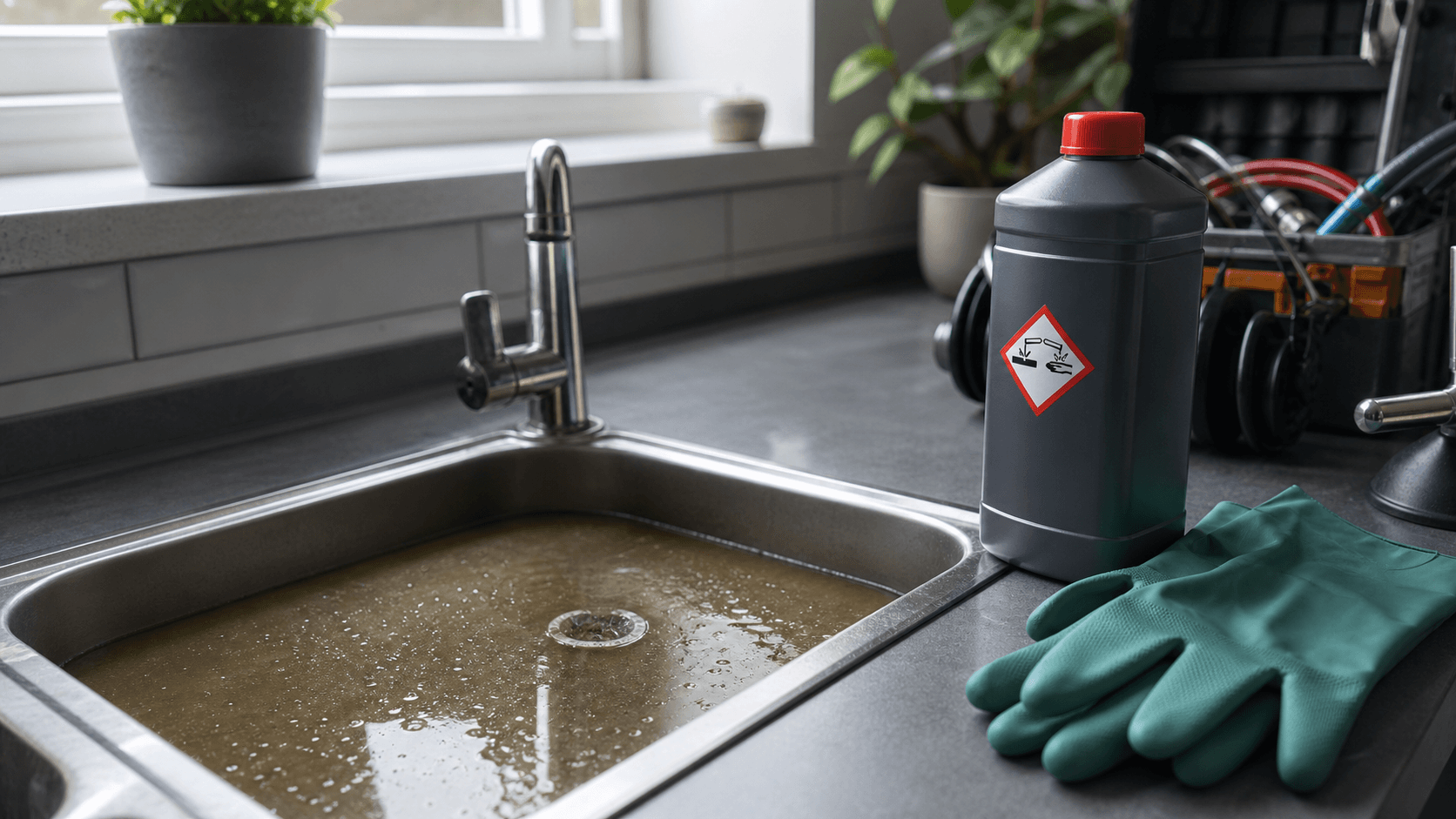
Chemical drain cleaners are not a risk-free cure for blocked drains. A product may shift a small, local build-up when used exactly as labelled, but corrosive ingredients can burn skin, react with other cleaners and leave hazardous liquid above a blockage. Repeated or widespread problems usually need diagnosis, not another dose.
Key takeaways
- Never mix drain cleaner with bleach, acid or another product.
- Use only a product approved for the pipe and blockage type.
- Stop if several fixtures back up, sewage appears or the blockage returns.
- Tell a drainage engineer what has already entered the pipe.
What makes chemical drain cleaners hazardous?
Chemical drain cleaners can harm people before they solve the blockage. The NHS classifies drain cleaners among household products capable of causing chemical burns and advises calling 999 if acid or another chemical gets onto skin or into eyes. That makes careful handling essential, not optional.
Many products use strongly alkaline, acidic or oxidising ingredients to break down organic material. The reaction may produce heat, while the liquid itself can damage skin and eyes. Pouring from height, squeezing a partly blocked bottle or leaning over the plughole increases the chance of a splash.
The greatest avoidable danger is mixing products. The Health and Safety Executive warns that adding other chemicals to bleach concentrate can release chlorine gas, which can irritate and corrode the eyes, skin and respiratory tract. A drain cleaner should therefore never be combined with bleach, descaler, toilet cleaner, vinegar or a second unblocker.
Keep children and pets away from the room. Ventilate as the label requires, wear the stated protective equipment and never transfer the product into an unlabelled container. For a workplace, follow the product safety data sheet and your COSHH arrangements rather than relying on domestic habits.
When might a chemical cleaner be appropriate?
A chemical cleaner may be reasonable for one slow-running sink when the product label specifically covers that fixture, pipe material and likely residue. It is not suitable simply because water is moving slowly. The manufacturer’s instructions determine the dose, contact time, ventilation and disposal steps, and those limits should not be extended.
First check for a simple obstruction that can be removed without opening the drainage system. Hair visible at a shower strainer or food caught in a sink basket can often be lifted out safely while wearing gloves. Removing accessible material avoids adding a hazardous substance to standing water.
Do not use a chemical product where the label excludes waste disposal units, toilets, septic systems, aluminium fittings or particular plastics. Avoid it when you do not know which cleaners have already been used. If a previous occupant, colleague or cleaner may have added something, the safest assumption is that mixing could be dangerous.
When should you avoid chemical drain cleaner?
Avoid chemical drain cleaner when more than one fixture is slow, foul water is rising, sewage is present or the same blockage keeps returning. These signs can point to a restriction farther along the system. Adding chemicals may create a contaminated work area while delaying the professional drain clearance that is actually required.
Do not pour cleaner into a completely blocked fixture if the label does not expressly permit it. The chemical can remain trapped in the basin, trap or pipe. Anyone who later removes a fitting, plunges the drain or uses powered equipment may then be exposed to corrosive liquid.
You should also stop DIY work if there is unexplained damp, ground movement, persistent odour or evidence that waste is escaping. A blockage may be linked to damaged or displaced pipework. A CCTV drain survey can inspect the internal condition of a suitable pipe and help distinguish recurring deposits from a structural fault.
Warning signs that need prompt action
Treat sewage entering a building as an urgent hygiene problem. Keep people and animals away from the affected area, avoid direct contact and do not use connected fixtures if doing so makes the backup worse.
If you smell a sharp chemical odour, notice fumes or develop coughing, eye irritation or breathing difficulty after products have been mixed, move away from the area and seek emergency advice. Do not lean over the drain to investigate.
What are safer first steps for a slow drain?
Safer action begins by identifying the scale of the problem. Check whether one fixture or several are affected, then stop running water that worsens the symptoms. This simple comparison helps separate a local trap obstruction from a possible shared drain blockage without introducing chemicals or dismantling hidden pipework.
For an accessible sink or shower, remove visible debris from the strainer while wearing gloves. A clean sink plunger may help a minor local obstruction, provided no corrosive cleaner is present and the fixture is suitable. Seal any overflow opening and use controlled pressure rather than forceful, repeated impacts.
Do not plunge after adding drain cleaner. Splash-back can expose your face and skin. Do not insert makeshift rods, wire or sharp tools, which may puncture a trap, damage seals or push an object deeper.
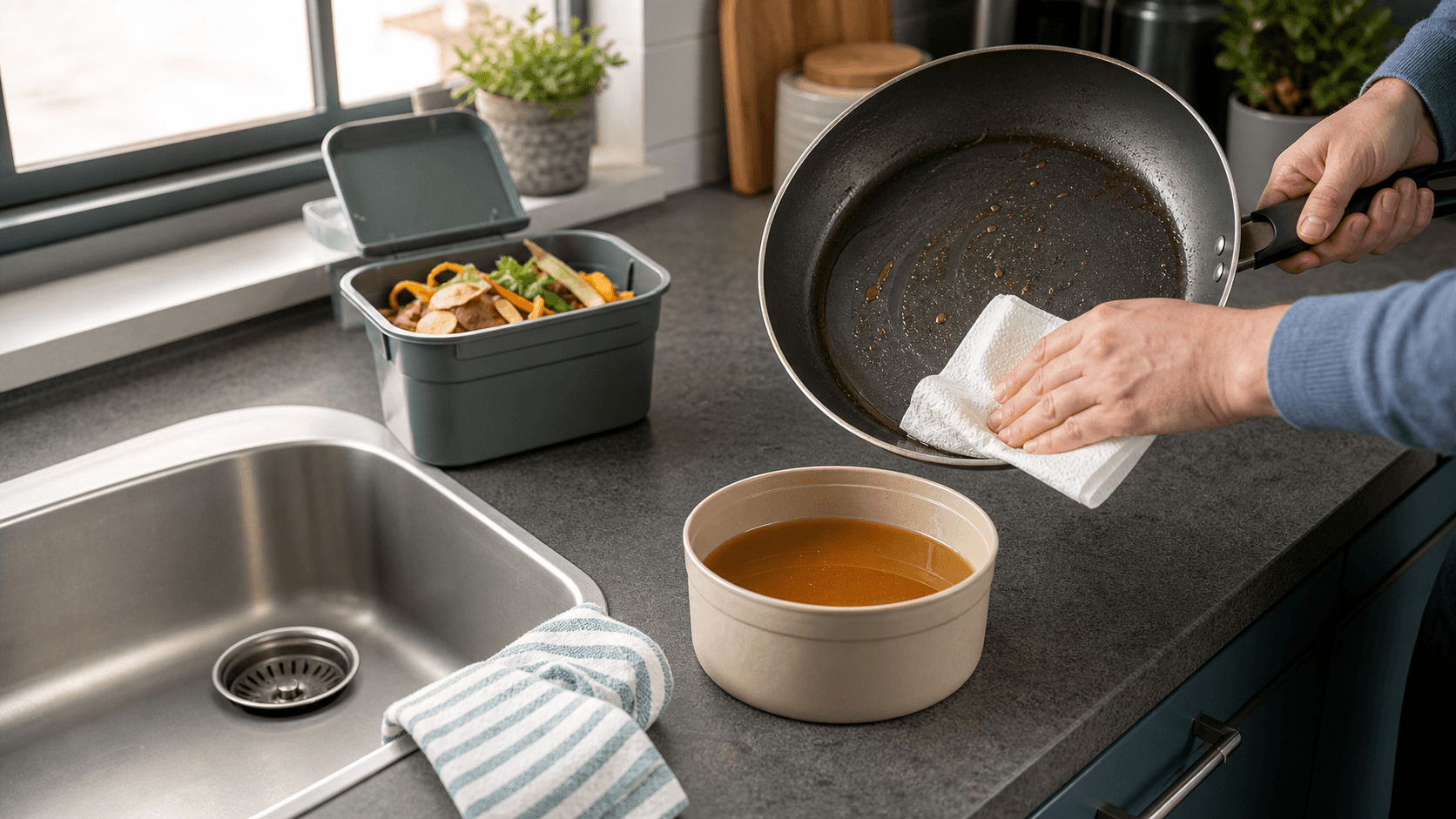
If grease is the likely cause, pouring boiling water into plastic waste pipes is not a dependable answer. It can soften some deposits temporarily while moving grease farther along, where it cools again. Prevention through correct fat disposal is safer and more effective than repeated reactive treatment.
What should you do after chemical exposure?
Act immediately after any splash. The NHS advises calling 999 for acid or chemical on the skin or in the eyes, removing contaminated clothing carefully and rinsing the affected area with cool or lukewarm running water for about one hour. Do not apply creams or another chemical.
Protect yourself before helping someone else, and avoid spreading contamination. Keep the product container or label available for emergency responders, but do not delay the call while searching for it. Follow emergency-service instructions rather than attempting to neutralise the chemical yourself.
If products have been mixed in a drain, leave the immediate area if fumes are present. Do not add water, bleach, acid or another substance unless emergency professionals specifically instruct you to do so. Open doors or windows only if this can be done without entering the affected space.
How will a drainage professional deal with the blockage?
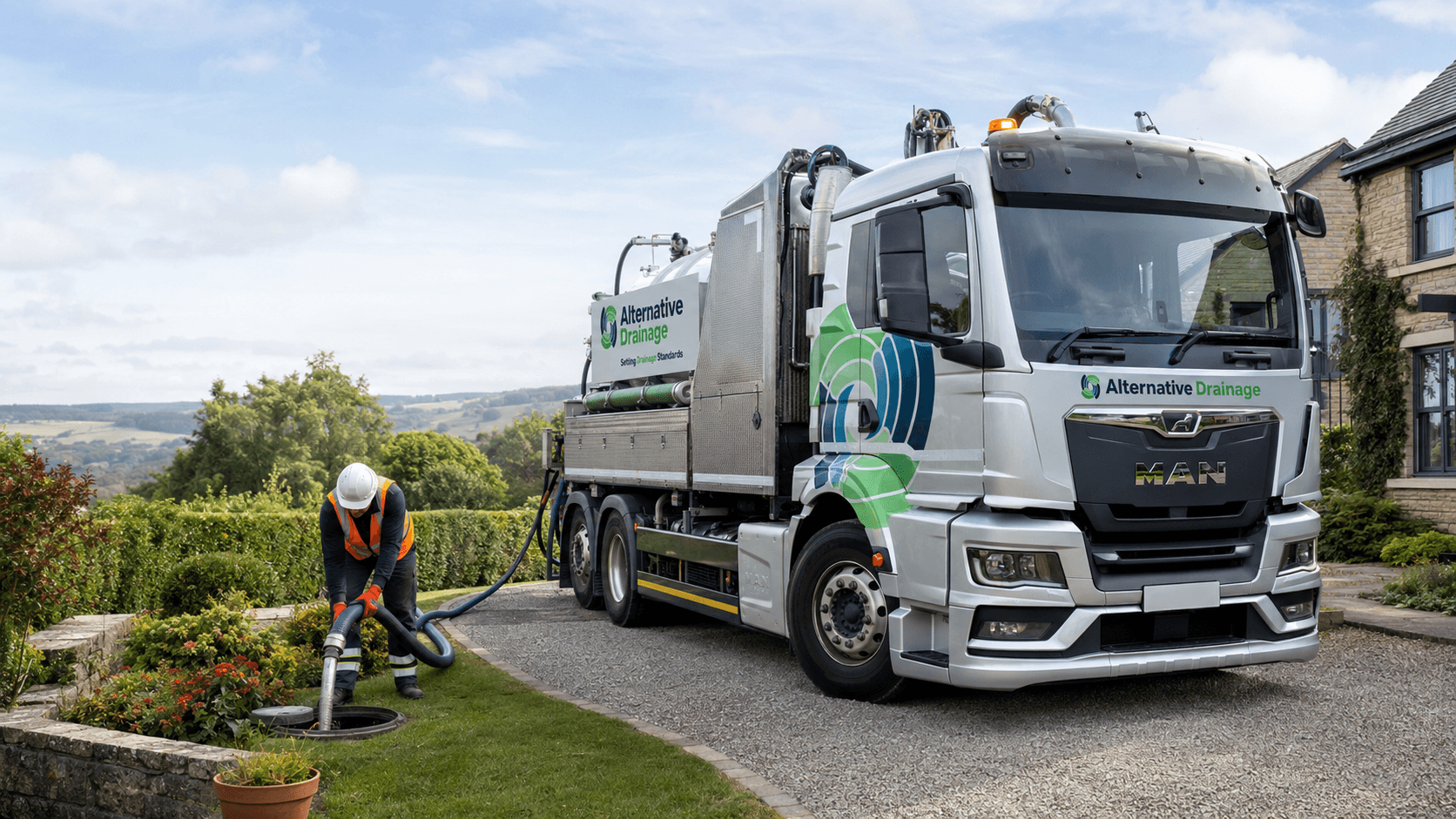
A drainage professional will first establish what is blocked, where symptoms appear and whether chemicals are present. That last detail is vital. State the product name, approximate quantity and time used before work begins, and keep the packaging available. The engineer can then choose controls and equipment appropriate to the hazard.
Mechanical clearance or water jetting may remove material that a chemical cannot, but the correct method depends on pipe condition, access and blockage type. It is not safe to assume that high pressure suits every system. Inspection may be recommended when blockages recur or damage is suspected.
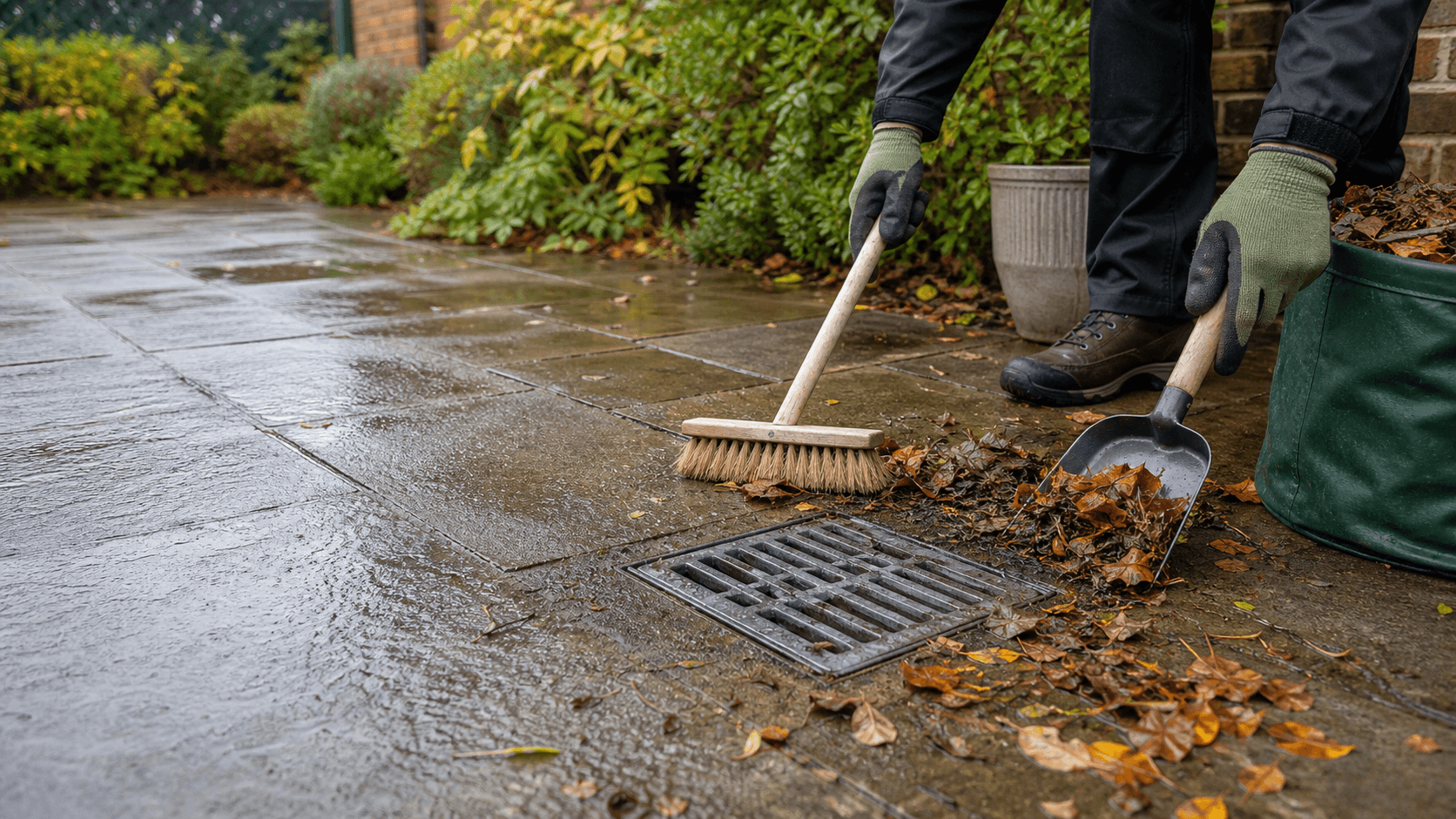
Once flow is restored, ask what caused the restriction and what should change. Hair traps, sink strainers, correct grease disposal and prompt attention to slow drainage can reduce repeat problems. A lasting fix is better than cycling through stronger products.
Frequently asked questions
Can chemical drain cleaner damage plastic pipes?
It can damage incompatible pipework, seals or fittings, particularly when overused or left longer than instructed. Heat from a chemical reaction may add to the risk. Check the label for permitted pipe materials and stop if the product instructions do not clearly cover your drainage setup.
Can I use bleach after chemical drain cleaner?
No. Never mix drain cleaner with bleach or any other cleaning product. The HSE warns that incompatible chemicals can release toxic gases or react violently. If products have already been combined and fumes or symptoms occur, leave the area and seek emergency assistance.
When should I call a drainage professional?
Arrange professional help when several fixtures are affected, sewage backs up, a blockage returns or one labelled treatment has failed. Also call when pipe damage is suspected. Always disclose any chemical already used so the engineer can assess and control the exposure risk.