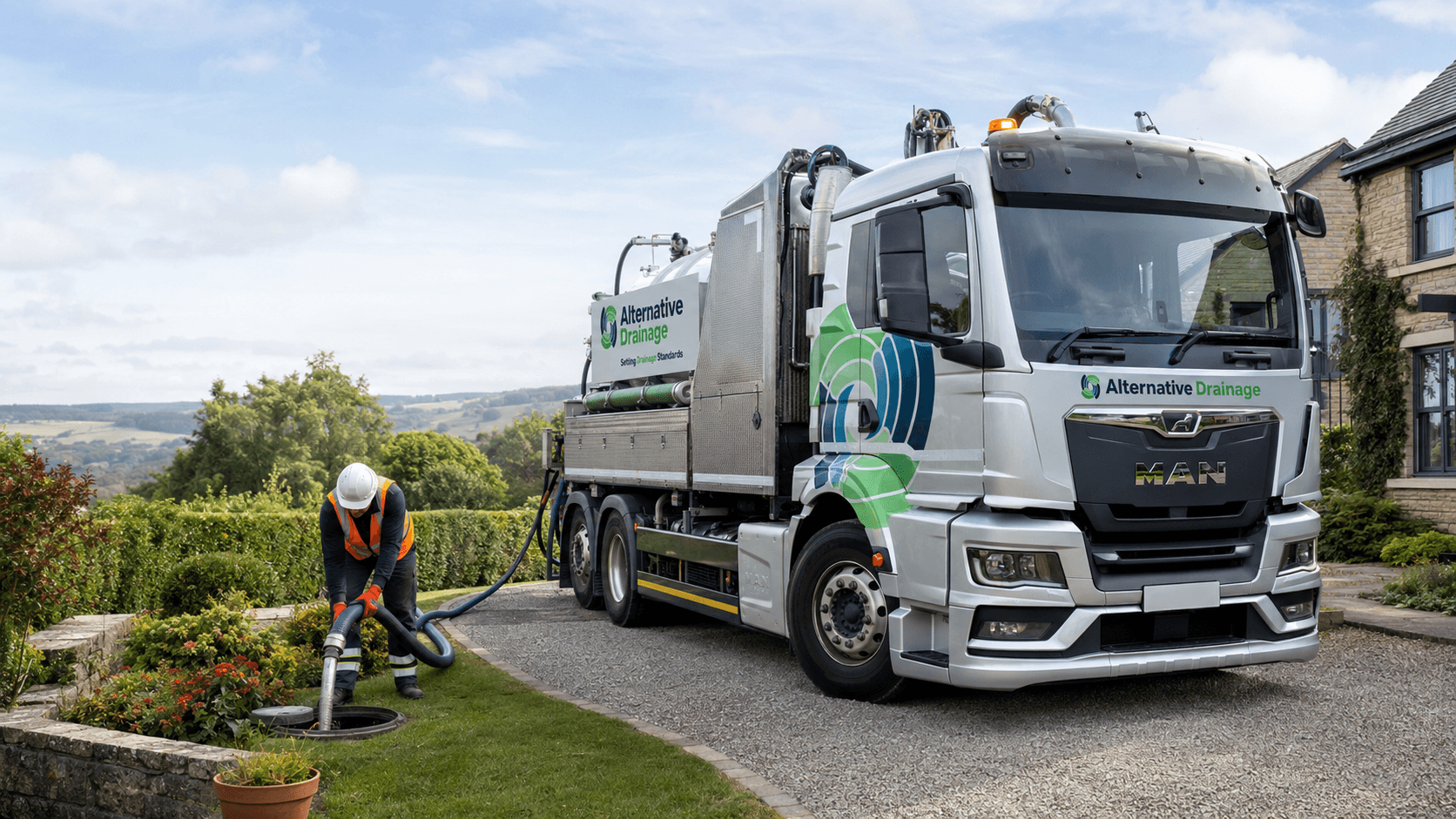
Most septic tanks should be emptied at least once a year, or sooner if the manufacturer's instructions, sludge level or usage require it. That is the safest planning baseline for a home, holiday property or managed site. Regular septic tank emptying and servicing removes accumulated solids before they can reach the outlet and damage the drainage field.
Key takeaways
- Start with an annual emptying schedule, then refine it using sludge checks and the manufacturer's guidance.
- More occupants, higher water use and a smaller tank can shorten the interval.
- Slow drains or odours are warning signs, not a maintenance timetable.
- Use a registered waste carrier and retain service records.
How often should a septic tank be emptied?
The Environment Agency says sludge should be removed before it exceeds the system's maximum capacity. Its general binding rules guidance for discharges to ground advises emptying at least once a year or in line with the manufacturer's instructions. Annual service is therefore a baseline, not a guarantee that every tank can safely wait twelve months.
The right interval depends on how quickly solids accumulate. A family home used every day normally produces more sludge than a similar property occupied only at weekends. Offices, pubs, care settings and holiday accommodation may experience sharp peaks that make a simple calendar estimate unreliable.
Start by checking installation documents, the tank's working capacity and its last emptying record. If those details are missing, ask a competent maintenance provider to identify the system and assess the sludge. A planned visit is more useful than waiting for toilets or drains to become slow.
For properties around West Yorkshire, local pages such as septic tank emptying in Wakefield and septic tank servicing in Huddersfield explain the available tanker coverage.
What changes the emptying interval?
Occupancy, water use, tank capacity and the condition of the drainage field all affect how often emptying is needed. No responsible schedule relies on household size alone. Two apparently similar properties can build sludge at different rates because their appliances, working patterns and systems differ.
Number of users and patterns of occupation
More people usually means more wastewater and solids entering the tank. Guest accommodation can also move from low use to full occupancy quickly. Managers should review the schedule after a change of tenant, business activity, opening hours or bedroom capacity rather than assuming the previous interval still fits.
Short periods of heavy use matter too. A rural venue may be quiet during the week but busy at weekends. Recording occupancy beside tanker dates can reveal whether the tank approaches its safe level faster during peak seasons.
Tank size and system design
A larger tank may provide more storage, but capacity should never be guessed from the cover dimensions. The visible access point reveals little about the chambers below. Manufacturer documents, installation plans or a professional inspection offer a firmer basis for scheduling.
Baffles and outlet arrangements also matter. Emptying does not repair a damaged partition, cracked tank or blocked outlet. If the level appears abnormal soon after a visit, the system needs investigation rather than another routine booking.
Water entering the system
Leaking taps, running toilet cisterns and inappropriate surface-water connections can overload an off-mains system. Clean rainwater should not be sent into a septic tank. Reducing avoidable inflow helps the tank and drainage field operate as designed, although it does not remove the need for desludging.
Grease, wipes, sanitary products, solvents and oils can cause separate problems. Only suitable domestic wastewater and toilet paper should enter a normal household system. Businesses must also check whether their discharge counts as domestic sewage because other discharges may require an environmental permit.
How can you tell whether emptying is due sooner?
The best evidence is the measured sludge level combined with service records. Warning signs can support that decision, but waiting for them risks damage. Slow fixtures, sewage smells, gurgling pipework, unusually lush ground or wet patches near the drainage field can indicate a full tank, a blockage or a failing system.
Do not open or enter a septic tank to investigate. Toxic gases, low oxygen, contaminated wastewater and unsecured covers create serious hazards. Keep people and animals away from suspect wet ground, avoid ignition sources and arrange a competent assessment.
A high liquid level does not always mean excessive sludge. Groundwater ingress, a damaged outlet, drainage-field saturation or a blockage can produce similar symptoms. A tanker visit may relieve the immediate level but will not correct the underlying defect.
If sewage is backing up, reduce water use immediately. Avoid flushing toilets, running washing machines or discharging baths until advice is obtained. Owners near Leeds can use the local septic tanker page for Leeds, while those near Halifax can check septic services in Halifax.
Why is waiting until the tank is full risky?
A septic tank needs working space to separate solids, scum and liquid. When sludge rises too far, solids can pass through the outlet into the drainage field. The Environment Agency warns that insufficient desludging can cause damage, pollution and expensive, disruptive repairs in its guidance for discharges to ground.
Once solids clog the surrounding soil, emptying the tank cannot restore the drainage field automatically. Wastewater may then pond on the surface or back up into the property. Early maintenance protects both the treatment process and the land receiving the effluent.
Overflowing sewage can expose people and animals to pathogens. Don't hose contaminated water into a ditch, stream or surface-water drain. If pollution is occurring or likely, contact the Environment Agency incident hotline and follow its advice, alongside arranging urgent professional help.
How should owners plan septic tank servicing?
Create a simple asset record containing the system type, approximate capacity, installation details, discharge destination and access route. Add emptying dates, sludge observations, repairs and invoices. This gives homeowners, facilities managers and future operators a defensible maintenance history.
Book before predictable busy periods and ensure the tanker can reach the access point safely. Keep parked vehicles, stored materials and livestock away from the route. Tell the provider about narrow lanes, weak surfaces, locked gates, overhead obstructions and any unusually long hose run when arranging the visit.
The waste must go through an authorised route. GOV.UK states that the company removing sludge must be a registered waste carrier. You can ask the company to confirm its registration or request the driver's waste carrier certificate. Keep the waste documentation or invoice with your property records.
Emptying should sit alongside inspection and maintenance, not replace them. Covers, baffles, alarms, pumps and the drainage field may need separate attention. Treatment plants also have mechanical and electrical components that require servicing to the manufacturer's schedule.
Frequently asked questions
Should a septic tank be emptied every year?
In most cases, yes. The Environment Agency advises at least annual desludging or the interval stated by the manufacturer. A competent sludge check may show that a particular site needs more frequent visits. Do not extend the interval simply because no smell or blockage has appeared.
Can a lightly used septic tank wait longer?
It may accumulate solids more slowly, but usage is only one factor. Tank size, incoming water, condition and manufacturer requirements still apply. Obtain a sludge assessment and document the decision before changing the schedule, especially at rented, shared or commercially managed premises.
What happens if emptying is delayed?
Sludge can pass into the outlet and drainage field, reducing treatment and causing ponding, backups or pollution. Arrange help before the tank reaches that point. If there is already sewage at the surface, restrict access, reduce water use and treat the situation as urgent.
Keep the schedule based on evidence
Annual emptying is the practical starting point for most septic tanks, but good management goes further. Combine the manufacturer's instructions with measured sludge levels, occupancy changes and a clear maintenance record. That approach is safer than reacting to odours or slow drains.
If the interval is unclear, arrange professional septic tank emptying and servicing before the expected due date. A planned assessment can establish a sensible future cycle while checking for defects that emptying alone would not solve.