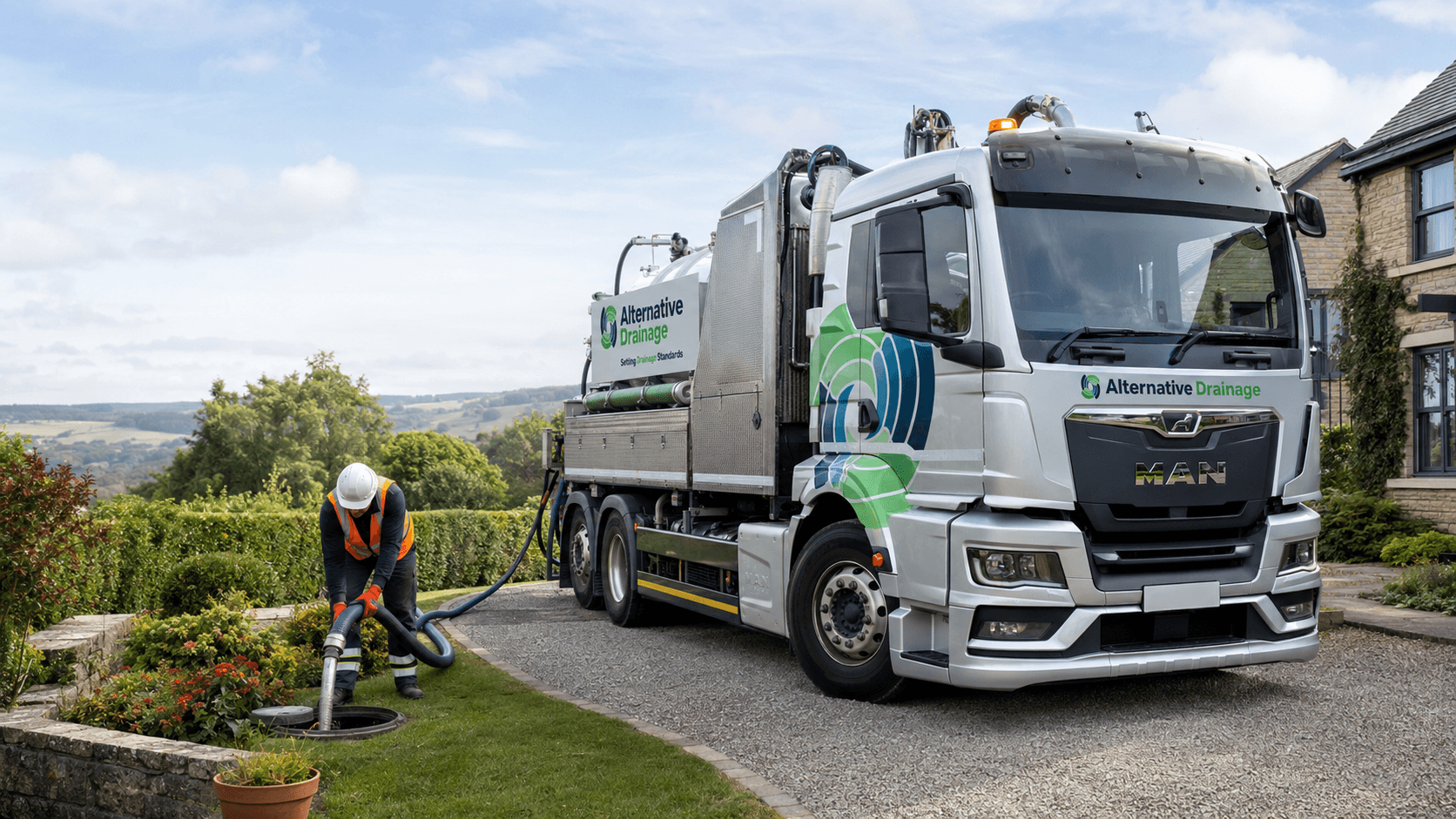
Common signs of a full septic tank include several slow drains, gurgling pipework, sewage smells, wastewater backing up and wet ground near the tank or drainage field. These symptoms need prompt attention, but they don't prove fullness on their own. Arrange septic tank emptying and servicing so the level, sludge and wider system can be assessed safely.
Key takeaways
- Several slow fixtures are more significant than one isolated blocked sink.
- Odours, ponding or sewage backup require prompt action.
- A tanker removes sludge but cannot repair a failed drainage field or damaged tank.
- Never enter a tank or lean over an unsecured opening.
What are the clearest signs a septic tank is full?
The clearest pattern is a change affecting several fixtures or the ground outside, particularly when the tank is due for emptying. Slow toilets, baths and sinks may occur together. Gurgling, odours or sewage returning through a low drain make the situation more urgent, although a blockage can cause similar effects.
Slow drains throughout the property
One slow basin often points to a local trap or waste-pipe blockage. When toilets, showers and sinks across the building all drain slowly, the restriction may be farther downstream. A high tank level, blocked inlet, damaged outlet or saturated drainage field should then be considered.
Don't repeatedly flush toilets to test the problem. Extra water can worsen a backup and push contaminated wastewater into the building. Note which fixtures are affected and whether the issue changes after rainfall, then give those details to the attending provider.
Gurgling and changing toilet levels
Gurgling can occur when air struggles to move through drainage pipework. Toilet water that rises unusually before draining, or sits at a different level, can be another warning. These symptoms still require diagnosis because pipe damage, poor venting and blockages can imitate a full tank.
Sewage smells indoors or outside
Persistent foul odours near drains, the tank or the drainage field deserve attention. Keep windows and doors closed near the source where practical, and prevent access to affected outdoor spaces.
Never use a flame to investigate a smell. Septic systems can contain flammable and toxic gases. Do not remove a heavy or damaged cover unless you are trained, equipped and authorised to do so.
Wet, spongy or unusually green ground
Ponding wastewater or soft ground near the tank and drainage field may indicate overflow, leakage or a drainage field that cannot accept more effluent. Lush strips of grass can trace where nutrient-rich liquid is reaching the surface. Keep children, visitors, pets and livestock away because the ground may be contaminated.
Does a bad smell always mean the tank needs emptying?
No. A bad smell may accompany a high sludge level, but it can also result from a dry trap, cracked pipe, poor vent, loose cover or treatment problem. Emptying without investigation may provide only temporary relief, so report where and when the odour occurs.
An odour limited to one bathroom may have a local cause. Smells after heavy rain may instead suggest groundwater ingress or a drainage field under stress. If the tank was emptied recently, ask for the inlet, outlet and receiving ground to be examined.
For local support, see septic tank services in Bradford or septic tank emptying in Barnsley. Access and service records can be discussed before attendance.
What should you do when sewage starts backing up?
Stop adding water immediately when sewage returns through a toilet, shower or floor drain. Avoid washing machines, dishwashers, baths and unnecessary flushing. Move people away from the affected room, especially children and anyone with health vulnerabilities, then arrange urgent professional assistance.
Do not use chemical drain cleaners as a general response. They may not reach the cause, can create handling hazards and may interfere with biological treatment. Never pump or siphon sewage onto land, into a road drain, ditch or watercourse.
If you can do so without touching wastewater, switch off appliances that could discharge automatically. Do not handle electrical equipment in a wet area. Where electricity and sewage are both present, keep clear and contact an appropriately qualified professional.
Is it a full tank or another septic system fault?
A proper assessment separates excess sludge from hydraulic and structural faults. A tank can appear high because the drainage field is saturated, the outlet is blocked or groundwater is entering through a crack. Conversely, a normal liquid level can conceal excessive settled sludge that is close to the outlet.
The Environment Agency's guidance for small sewage discharges to ground says systems must be maintained and repaired or replaced when they are not in good working order. Examples include leaks, cracks, failed mechanical parts and pools of water around the drainage field.
When emptying is likely to help
Emptying is appropriate when sludge approaches the system's maximum capacity or the scheduled interval has arrived. It creates room for normal separation and allows accessible internal components to be observed. The Environment Agency advises desludging at least once a year or as required by the manufacturer.
When further investigation is needed
Rapid refilling after emptying points away from ordinary sludge accumulation. Likely causes include groundwater ingress, a blocked outlet or effluent returning from saturated ground. CCTV inspection, pipe clearance, component repair or drainage-field assessment may be needed, depending on the system.
Emptying won't restore a clogged drainage field. Solids that leave an overfull tank can reduce the soil's ability to accept and treat effluent. The underlying cause must be addressed to prevent another overflow.
When does the problem become an environmental incident?
Treat sewage entering a stream, ditch, pond or surface-water drain as potential pollution. The same applies to widespread contaminated ponding that could reach water or neighbouring land. GOV.UK's general binding rules require operators to prevent pollution from septic tanks and small sewage treatment plants.
Contact the Environment Agency incident hotline when pollution is occurring or likely. Give the location, affected water or land, visible extent and when the problem began. Arrange remedial help as well, but do not enter contaminated water or attempt unsafe excavation.
Sludge must be removed by a registered waste carrier. Ask the provider to confirm its registration and retain the invoice or waste documentation. Responsible disposal is part of resolving the incident, not an optional administrative step.
How can owners prevent the warning signs returning?
Use a planned emptying interval based on the manufacturer's instructions, actual sludge observations and property usage. The annual interval in Environment Agency guidance is a baseline. Higher occupancy, seasonal peaks or a smaller working capacity may justify more frequent checks or emptying.
Keep records of tanker visits, repairs and unusual symptoms. Check visible ground without opening covers. Repair leaks and keep roof or yard drainage separate.
Only flush human waste and toilet paper. Wipes, sanitary products, fats, oils, solvents and medicines can obstruct pipework or disrupt treatment. Managers should make these boundaries clear to occupants, cleaners and contractors.
Frequently asked questions
What is the first sign of a full septic tank?
Several slow fixtures are a common early sign, especially when emptying is overdue. However, a blockage or drainage-field problem can look similar. Check records, reduce unnecessary water use and arrange a professional assessment instead of waiting for sewage to back up.
Can I keep using water while waiting for a tanker?
Use as little as possible if the tank is overflowing or drains are backing up. Stop washing machines, dishwashers, baths and avoid unnecessary flushing. Continued discharge can spread contamination and increase internal damage.
Will emptying solve every septic tank problem?
No. It removes accumulated sludge and may relieve an overfull system, but it cannot repair a crack, failed baffle, blocked outlet or saturated drainage field. Ask for further investigation if symptoms return quickly or remain after emptying.
Act before a warning becomes an overflow
Slow drains, smells and wet ground are prompts to investigate, not a diagnosis by themselves. Reduce water use when symptoms are serious, protect people from contamination and don't open or enter the tank.
Timely septic tank emptying and servicing can remove excess sludge and establish what needs attention next. Owners near Dewsbury can also check the local septic tanker service when planning access or urgent attendance.