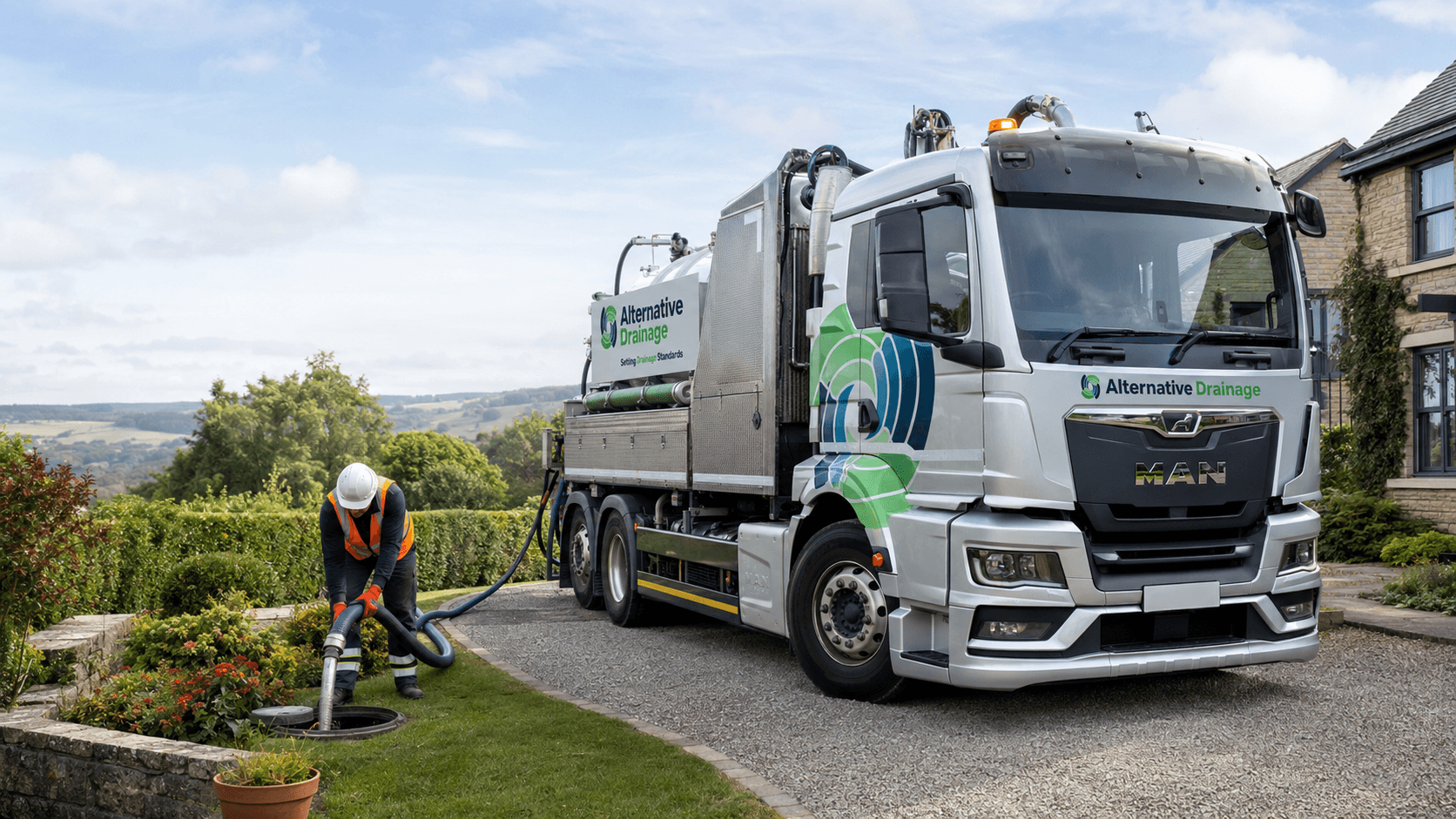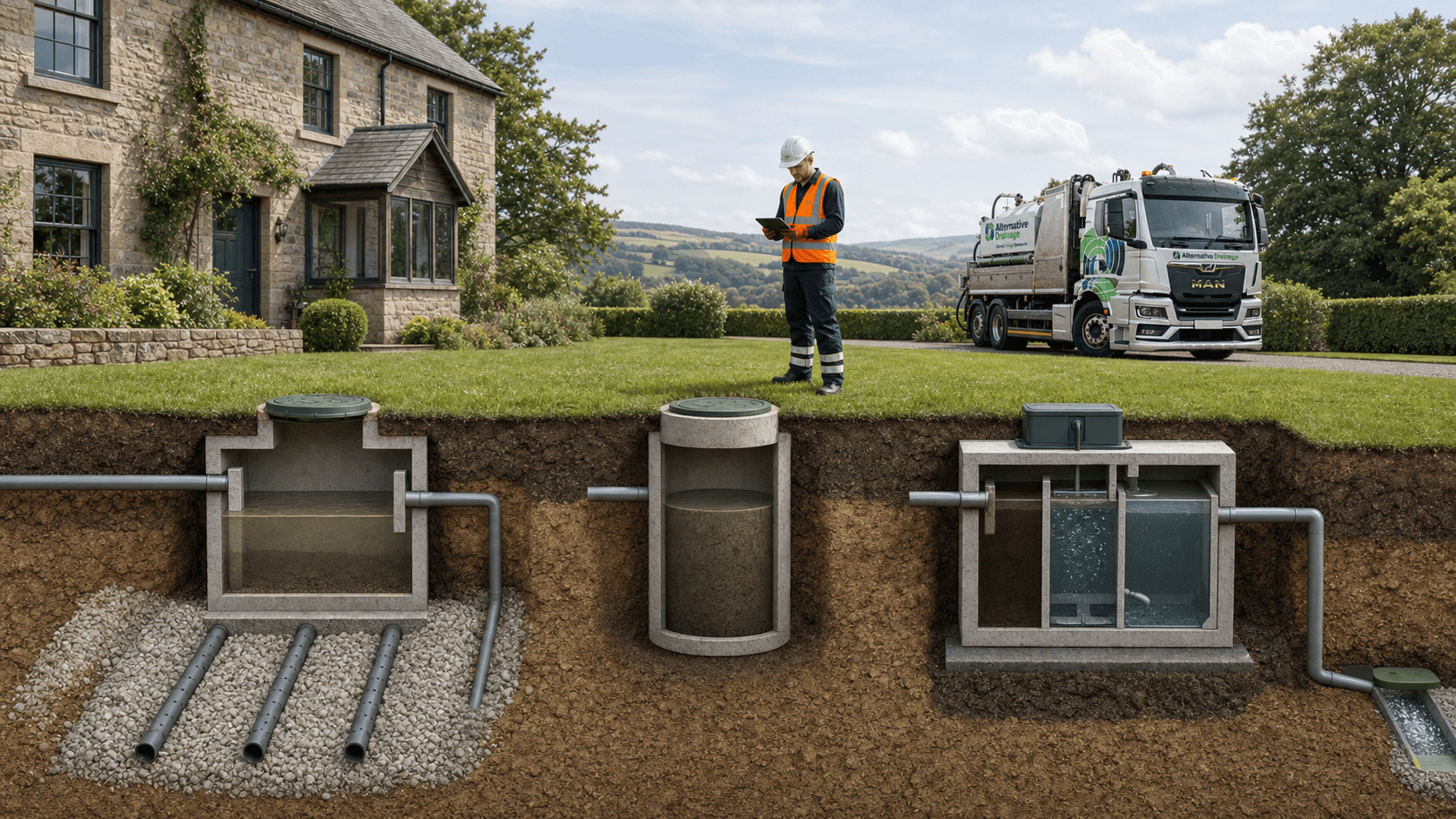
A septic tank separates sewage and discharges settled liquid to a drainage field. A cesspit stores everything in a sealed tank for collection. A sewage treatment plant treats wastewater to a higher standard before an authorised discharge. The right choice depends on the site, discharge destination, occupancy, maintenance capacity and current rules, not simply the lowest installation price.
Key takeaways
- Septic tanks need a suitable drainage field and cannot discharge directly to a watercourse.
- Cesspits have no outlet and usually need frequent tanker visits.
- Treatment plants use an active process and require servicing as well as desludging.
- New or altered systems may need planning, building-control and Environment Agency checks.
What is the difference between the three systems?
The main difference is what happens after sewage enters the tank. A septic tank provides basic settlement before liquid moves into the ground. A cesspit only stores sewage. A treatment plant processes it more thoroughly and may discharge to ground or surface water when the applicable rules are met.
That distinction controls much of the maintenance and legal position. If wastewater leaves a supposed cesspit, it isn't a cesspit. A septic tank pipe running directly to a stream does not meet England's current general binding rules.
GOV.UK's overview of septic tanks and treatment plants defines a septic tank as an underground tank where solids settle and liquid soaks through the ground. It describes a package treatment plant as a system that treats liquid sufficiently for an eligible ground or surface-water discharge.
How does a septic tank work?
A septic tank slows incoming domestic sewage so heavier solids settle as sludge and lighter material forms a surface layer. The liquid between them passes through the outlet into a drainage field. Soil then provides further treatment as the effluent moves through it.
The tank and drainage field operate as one system. Emptying the tank protects the field by reducing the risk of solids reaching the outlet. However, tanker work cannot compensate for an undersized, waterlogged, compacted or clogged drainage field.
Environment Agency guidance for discharges to ground says septic tank or treatment-plant effluent must pass to ground through a drainage field. It also states that septic tank effluent must not discharge to a watercourse. Sites that cannot meet the general binding rules may need changes or an environmental permit.
Practical maintenance needs
Plan desludging at least annually or according to the manufacturer's instructions, then adjust for use and measured sludge levels. Keep records of emptying, repairs and inspections. Prevent roof water, yard drainage, fats, wipes and chemicals from entering the system.
A septic tank still needs maintenance. Covers, baffles, inlet and outlet pipes can deteriorate. Protect the drainage field from vehicles, structures and deep-rooted planting.
What makes a cesspit different?
A cesspit, sometimes called a cesspool, is a sealed holding tank with no discharge outlet. Every litre entering must remain there until a registered waste carrier removes it. This makes cesspits useful only in limited circumstances and gives them a different running-cost profile.
GOV.UK's cesspool guidance says the general binding rules do not apply to cesspools. However, the owner must maintain the tank, prevent leaks and overflows, and arrange regular emptying by a registered waste carrier. A cesspool causing pollution breaks the law.
Because no effluent leaves during normal operation, occupancy and water use directly determine how quickly storage is consumed. A running toilet, leaking tap or unexpected guests can bring the next tanker visit forward. Level alarms and reliable records are particularly valuable.
Cesspit safety and management
Never open or enter a cesspit to check its contents. Confined-space hazards include toxic gases, low oxygen and drowning. Use a secure access cover and arrange assessment through a competent provider.
Managers should track the level, usual fill time and collection dates. They should also provide clear tanker access before capacity becomes critical. GOV.UK gives monthly emptying as an example, but the actual interval depends on usable capacity and inflow.
How does a sewage treatment plant work?
A package treatment plant uses biological treatment, supported by aeration or moving components, to produce cleaner effluent than a septic tank. It still accumulates sludge, so it needs servicing and desludging. Electricity, alarms and replacement parts may form part of its operating needs.
Treatment plants can suit sites where a compliant discharge to surface water is necessary and permitted. Under the Environment Agency's surface-water general binding rules, sewage discharged to a watercourse must be treated by a small sewage treatment plant. A septic tank alone is not acceptable for that route.
The higher treatment standard does not allow unrestricted discharge. Daily volume limits, siting rules, design standards, maintenance and pollution prevention still apply. Sensitive locations or systems outside the general binding rules may require an environmental permit.
Mechanical servicing matters
Follow the manufacturer's service schedule, not only the tanker calendar. Blowers, pumps, diffusers and alarms need checks by a competent person. A plant may retain liquid while its treatment process has stopped, so appearance alone cannot confirm performance.
After a power cut or alarm, limit wastewater where practical and consult the manual or service provider. Do not reach into chambers or handle electrical equipment beside wet access points.
Which system is cheaper to run?
Running cost depends on more than emptying frequency. Septic tanks need periodic desludging and a functioning drainage field. Cesspits usually incur frequent collections. Treatment plants add electricity and mechanical servicing, although their discharge options can make them suitable where a septic tank is not.
Compare tanker frequency, service visits, electricity and likely drainage-field work over several years. Include access costs where a restricted approach complicates emptying.
Don't reduce cost by delaying emptying. Sludge escaping into a drainage field can cause pollution and difficult repairs. Likewise, a cesspit must never be allowed to overflow, and a failed treatment plant should not continue discharging untreated sewage.
Professional septic tank and treatment plant servicing can support routine waste removal and maintenance planning. Property owners around Pontefract can review local septic tanker coverage, while those around Brighouse can check septic services in Brighouse.
Which system suits a property best?
The best system is the one that is lawful, correctly sized and practical to maintain at that site. Ground conditions, flood risk, nearby water, distance from a public sewer, occupancy and access all matter. An installer should assess these factors rather than selecting from a simple product list.
For a new discharge in England, GOV.UK says connection to a public foul sewer must be considered first where the Environment Agency regards it as reasonable. Its new discharge guidance also requires building regulations approval for a new sewage treatment system.
Before buying a property, establish the actual system type and discharge point. Ask for installation details, maintenance records, emptying receipts and permits where applicable. If the route is unclear, a competent survey can identify whether the system stores, settles or treats sewage.
Frequently asked questions
Is a cesspit the same as a septic tank?
No. A cesspit is sealed and stores all sewage for collection. A septic tank separates solids and sends settled liquid to a drainage field for further treatment in the soil. Their emptying patterns, discharge arrangements and management risks therefore differ.
Can a septic tank discharge into a stream?
No. Environment Agency guidance says septic tank effluent must not discharge to a watercourse. A compliant treatment plant or a suitable drainage field may be needed, depending on the site. Seek specialist and regulatory advice before altering any discharge.
Which system needs emptying most often?
A cesspit generally needs collection most often because it retains all incoming wastewater. Septic tanks and treatment plants release effluent but still require sludge removal. Follow the manufacturer's instructions and actual site conditions rather than assuming one fixed interval.
Decide from evidence, not labels
Septic tanks, cesspits and treatment plants solve different off-mains drainage problems. Confirm where wastewater goes, whether the system treats it, and what maintenance the site can support. Then check planning, building-control and Environment Agency requirements before installing or altering anything.
Once the system is identified, establish a documented schedule for emptying and servicing. Responsible operation protects occupants, neighbouring land, groundwater and watercourses while reducing the risk of preventable emergency work.